
Introduction
The European Union is reshaping the future of packaging.
With the implementation of the Packaging and Packaging Waste Regulation (PPWR), every company supplying packaging to the European market must prepare for stricter sustainability requirements, increased recyclability targets, and reduced plastic waste.
For food packaging manufacturers, retailers, importers, and brand owners, PPWR is more than a new regulation—it represents one of the biggest transformations the packaging industry has experienced in decades.
If your products are exported to Europe, understanding PPWR is no longer optional.
This guide explains everything you need to know about EU PPWR, its impact on food packaging, and how businesses can prepare for the transition.
6.3
What Is EU PPWR?
The Packaging and Packaging Waste Regulation (PPWR) is a comprehensive European Union regulation designed to reduce packaging waste and accelerate the transition toward a circular economy.
Unlike previous directives, PPWR is directly applicable across EU Member States, providing consistent rules for packaging manufacturers, importers, retailers, and brand owners.
Its objectives include:
1.Reducing unnecessary packaging
2.Increasing recyclable packaging
3.Promoting compostable packaging where appropriate
4.Reducing plastic waste
5.Supporting climate neutrality goals
6.Encouraging packaging reuse and recycling
Why Is PPWR Important?
Every company selling products in Europe will eventually be affected.
Industries impacted include:
1.Food Packaging
2.Fresh Produce
3.Takeaway Packaging
4.Coffee Chains
5.Supermarkets
6.Ready Meals
7.Food Delivery
8.Catering
9.Meat Packaging
10.Bakery Packaging
11.Disposable Tableware
Failure to comply may create supply chain risks and reduce market competitiveness.
Key PPWR Requirements
1. Packaging Must Be Designed for Recycling
Future packaging should support efficient recycling and circular economy systems.
2. Reduction of Excess Packaging
Manufacturers are encouraged to minimize unnecessary packaging materials while maintaining product protection.
3. Increased Use of Sustainable Materials
Renewable materials such as plant fiber are becoming increasingly important.
4. Compostable Packaging for Specific Applications
Certain packaging applications are expected to move toward industrial or home compostable alternatives where appropriate.
5. Reduced Plastic Consumption
Plastic reduction remains one of the core objectives of PPWR.
How Does PPWR Affect Food Packaging?
Food packaging manufacturers face new challenges:
1.Compliance with recycling requirements
2.PFAS-free food contact materials
3.Plastic reduction
4.Food safety
5.Barrier performance
6.Consumer expectations
7.Supply chain transparency
As a result, many global brands are transitioning toward molded fiber packaging.
Why Plant Fiber Packaging Is Becoming the Preferred Solution
Plant fiber molded packaging offers several advantages:
✔ Renewable raw materials
✔ Reduced plastic dependence
✔ Excellent product protection
✔ Strong sustainability profile
✔ Consumer-friendly appearance
✔ Compatibility with future environmental regulations
Combined with advanced lamination technologies, molded fiber packaging can achieve excellent oil resistance, moisture resistance, and food preservation performance.
The Role of PFAS-Free Packaging
As global attention on PFAS continues to increase, many brands are actively replacing conventional grease-resistant coatings.
PFAS-Free molded fiber packaging helps companies reduce regulatory risks while supporting long-term sustainability goals.
Why Global Brands Choose Far East GeoTegrity
Since 1992, Far East GeoTegrity has specialized in Plant Fiber Molded Packaging Solutions.
Unlike companies that only manufacture packaging products, we integrate:
1.Equipment R&D
2.Mold Design
3.Product Development
4.Large-scale Manufacturing
5.Technical Support
6.Turnkey Factory Solutions
This “Machinery + Products” model enables us to continuously optimize production technology while delivering stable, high-quality packaging solutions.

China + Thailand Manufacturing Network
Far East GeoTegrity operates manufacturing facilities in both China and Thailand.
This dual-base strategy provides:
*Stable global supply
*Reduced supply chain risks
*Flexible production capacity
*Faster international delivery

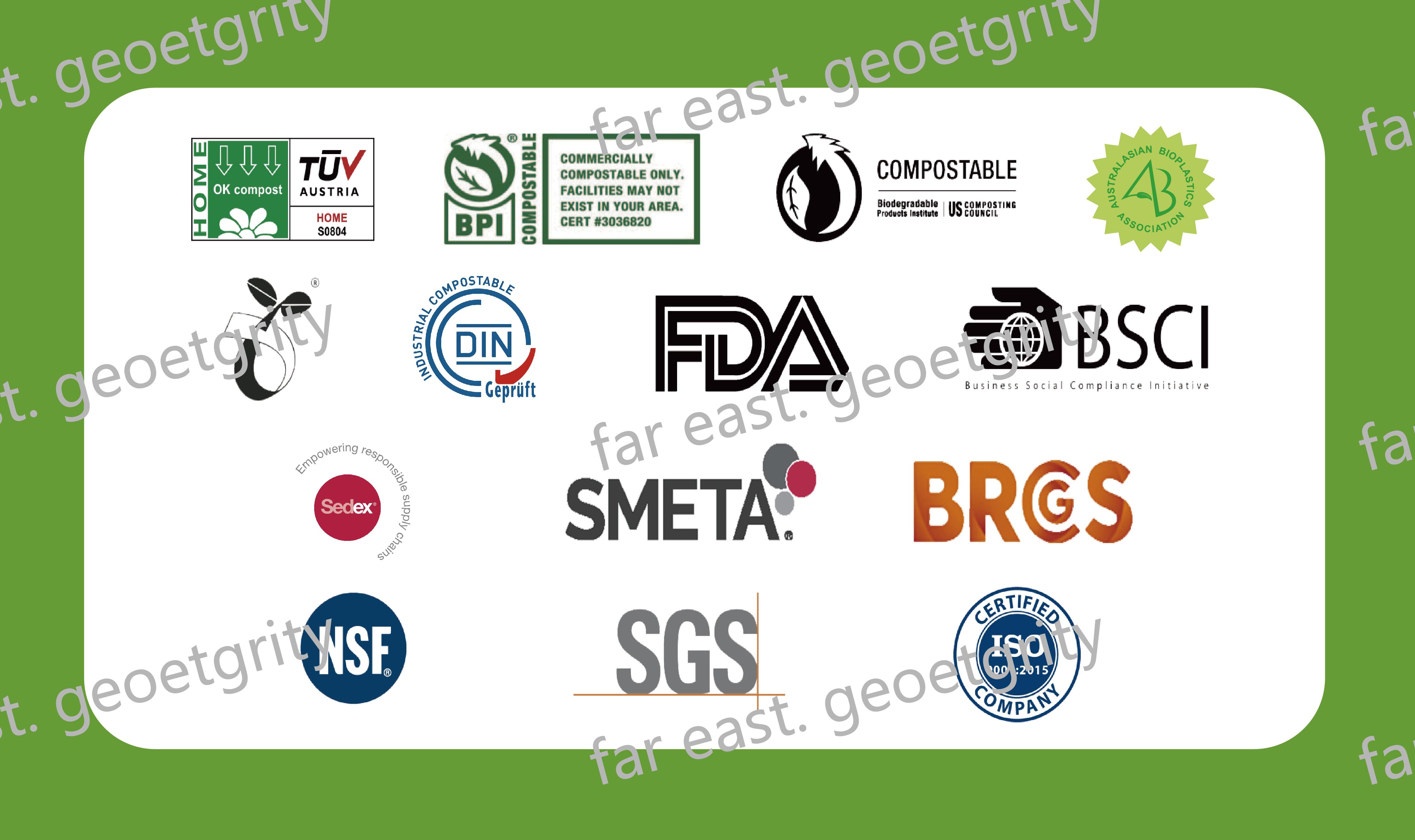
International Certifications
Our products comply with major international standards, including:
FDA
LFGB
NSF
BRCGS Grade A
BPI Home Compostable
OK Compost HOME
ABA Home Compostable
Our equipment also meets:
CE Certification
UL Certification
Frequently Asked Questions
What is PPWR?
PPWR is the European Union Packaging and Packaging Waste Regulation designed to improve packaging sustainability and reduce waste.
Does PPWR ban plastic packaging?
PPWR does not prohibit all plastic packaging. Instead, it introduces stricter requirements for recyclability, packaging design, and waste reduction, while encouraging the use of more sustainable materials where appropriate.
Is molded fiber packaging suitable for PPWR?
Plant fiber molded packaging can help companies meet many sustainability objectives under PPWR when designed to comply with applicable regulatory and performance requirements.
How can companies prepare?
Companies should begin evaluating:
Sustainable packaging materials
PFAS-free solutions
Packaging redesign
Recycling compatibility
Reliable long-term suppliers
Conclusion
The transition driven by EU PPWR represents both a challenge and an opportunity.
Companies that invest early in sustainable packaging technologies will be better positioned to comply with future regulations, strengthen brand value, and remain competitive in the European market.
With more than 30 years of experience, 180+ patented technologies, China & Thailand manufacturing bases, and integrated capabilities in equipment manufacturing, mold development, and molded fiber packaging production, Far East GeoTegrity helps customers build future-ready packaging solutions for the global market.
Post time: Jul-06-2026